“I’m Running Because It Shouldn’t Be So Hard to Live Here”
Aparna Raj is a tenant organizer and socialist running for city council in Washington, DC. We spoke to Raj about the affordability crisis in the nation’s capital and why the push for DC statehood will be crucial under a potentially Democratic Congress.
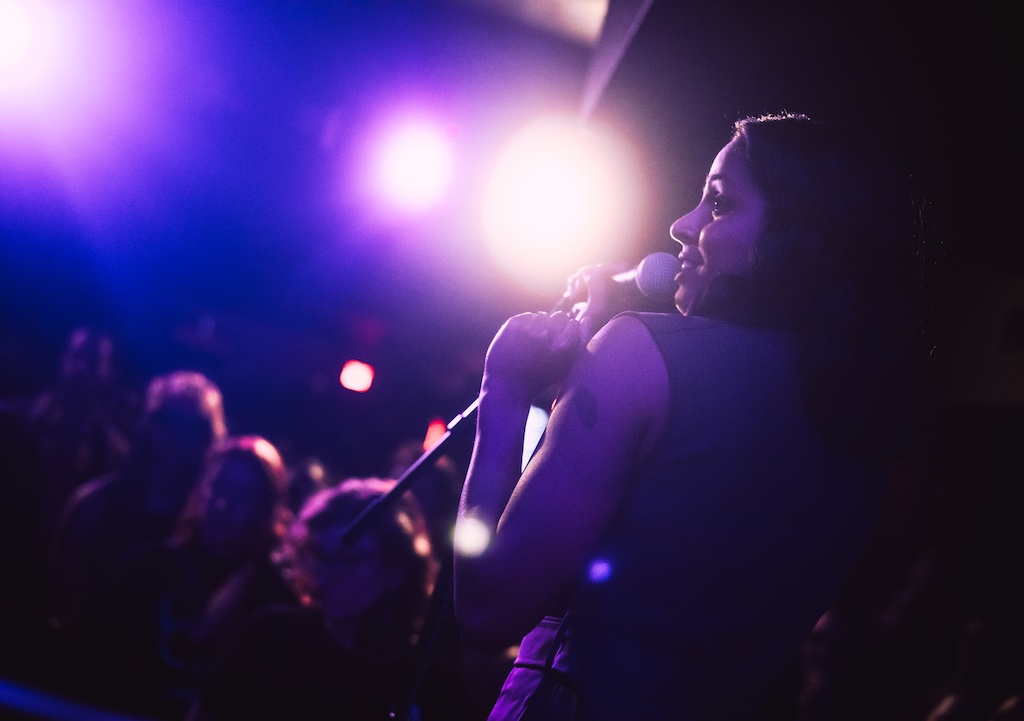
City council candidate Aparna Raj’s history of organizing for tenants rights, food justice, and labor is embedded in her campaign. (Aparna for DC)
- Interview by
- Sahar Roodehchi
For the past year and a half, residents of Washington, DC, have seen the federal administration attempt to take an increasing share of control of local governance. The Trump administration has deployed the National Guard in the city and established a “Safe and Beautiful Task Force,” both of which are expected to stay through 2029. This year marks a crucial opportunity to reshape DC’s leadership through local elections that can push this federal overreach back.
Aparna Raj announced her candidacy for Ward 1 DC Council last summer. A renter and a democratic socialist, her platform prioritizes rent control and affordable housing, universal childcare, and local autonomy. She has been endorsed by unions including local chapters of UNITE HERE, the Service Employees International Union (SEIU), and the Communications Workers of America Union (CWA) as well as the American Federation of Labor and Congress of Industrial Organizations (AFL-CIO). Her history of organizing for tenants rights, food justice, and labor is embedded in her campaign. She is also endorsed by the Metro DC chapter of Democratic Socialists of America (DSA).
Raj spoke with Sahar Roodehchi to share how she’ll be an “organizer in office,” pushing local leaders to prioritize the needs of everyday people over developers and corporations. She lays out how her policies will support working people and protect DC residents from federal overreach and dangerous immigration policies, laying out a vision of how to make Ward 1 a home that welcomes and works for everyone.
You’re running for the Ward 1 seat on the DC Council. What motivated you to run for office? Can you tell me about your background?
I never thought that I would run for office. Growing up, my parents, when they first immigrated to the US, worked different jobs. My dad worked as a bookkeeper at a hotel. My mom worked first at the back of an auto dealership and then in retail for minimum wage. Later it felt a little more secure, but we never escaped this feeling that things could fall apart at any point. My dad got laid off when I was in high school, and we didn’t know if I could afford to go to college. It just felt like things were set up for us to fail a lot of the time, even if we did everything we were supposed to.
I moved to DC, and I saw that in my organizing. After the 2016 election, I wanted to get more involved, so I started doing immigrants’ rights work, organizing during the first Trump administration, and working at a food justice organization. Eventually, when I had my own bad experience with my landlord, I moved into tenant organizing. That really showed me there are tenants in DC who are living in horrible conditions.
People are getting priced out of the ward and out of DC entirely. There are people who have to work two or three jobs to get by. There are people who have to choose between groceries or rent or medicine. I started organizing a rent strike with a building in Ward 8, and then I started organizing with a few buildings in Ward 1, like the Woodner Tenants Union and Tivoli Gardens [Tenants’ Association].
In the past couple years, I helped lead the fight to pass Initiative 82 to raise the tipped minimum wage in DC. Then I saw the council repeal the initiative and take away wage increases that tipped workers depended on. I’ve seen our council take away the Tenant Opportunity to Purchase Act (TOPA) for thousands of renters in DC, a protection that gives tenants power [to control] what happens to their home. I saw the council cut emergency rental assistance and zero out housing vouchers for single adults experiencing homelessness.
It really illuminated for me the fact that we need someone on the council who will fight for renters and workers and immigrants, especially now with the Trump administration attacking so many people in Ward 1.
When the occupation of the city first started, people came out and defended their neighbors and protected each other. But I just kept thinking: Where are our elected leaders? This past year has been really hard; it’s been really hard for a lot of people in DC for a very long time, and I’m running because it shouldn’t be so hard to live here. It should be more affordable and easier for people to come here, to start a family, and to age here.
Can you tell me what it means to you to be a democratic socialist? What have you built with DSA, and what do you hope to expand on?
I came to DSA because it really spoke to my values at a time when I didn’t see them in a lot of politicians. For me, being a democratic socialist means recognizing that every single person deserves a dignified home, good union job, good schools, good transit, and good governance and constituent services. Our government should be providing that for us.
I feel like a lot of councilmembers and the mayor have been ignoring working people in DC. Through our local DSA chapter, we’ve been able to build power through tenant unions to take on terrible landlords. We’ve been able to support creating unions at people’s workplaces, to demand better pay and benefits. And we’ve even been able to elect democratic socialists to office across the DMV [region] and pass Initiative 82, which phased out the tipped subminimum wage. These are real achievements that are improving people’s lives.
This is not just about winning one seat or about one candidate. This is about building up a larger movement in D, so even after this election, we have that base and that movement of people who can demand better housing and better wages and everything that we deserve. For me, being a democratic socialist is knowing that we deserve better and that we can have better, and then fighting for it.
What are the most important issues facing Ward 1?
The number-one issue that we’ve seen, especially since August, is [Immigration and Customs Enforcement] ICE and [Donald] Trump’s attacks on Ward 1. We have a lot of immigrants here. And at the height of the federal occupation, I would see three or four disappearances a day. Especially at the beginning, we saw our leaders be totally absent and even saw our mayor trying to repeal sanctuary status in DC.
As a Ward 1 councilmember, it will be really important to end our local police department’s collaboration with ICE; to strengthen our Sanctuary Values Act; to provide more protections for immigrants like funding immigration legal defense funds, so people have representation in court if they’re facing detention or deportation; and use the Office of Constituent Services and Office of the Councilmember to organize volunteering and mutual aid, because we’ve seen such incredible volunteer power and organizing power in Ward 1. But that should also come from our government — to make sure people have groceries, students are picked up from school safely, and to be on the ground ourselves, providing an extra set of eyes for ICE watch.
Another major issue is the cost of housing. That’s probably the one that I hear [while knocking] doors the most. Ward 1 is two-thirds renters, and rent is rising way faster than the minimum wage. We have rent stabilization, but it only applies to buildings built before 1975.
Especially as we build more housing and older buildings get replaced with newer ones, fewer and fewer people are going to be protected from major rent hikes. That’s why one of my major platforms is trying to expand rent stabilization, protect things like the Tenant Opportunity to Purchase Act, and create more housing. We’re in the densest ward in DC, and everyone should be able to live here if they want to.
The third thing is the cost of childcare, which is really, really high. We have a lot of young families that move to Ward 1 or live in Ward 1 because we have great elementary schools and a good school system here. I don’t have kids, but I am thinking about it, and I would love to be able to stay in this neighborhood. But childcare is $22,000 a year on average, which is effectively a second rent or mortgage. And our equity fund and our childcare subsidies are continuously threatened in the budget. We need free, universal childcare.
It can often feel overwhelming for DC residents as we watch our rights be threatened — not just at a federal level but at a local level. As Congress continues to threaten home rule, how do you intend to fight for local autonomy? What part can Ward 1 play?
Ward 1 has obviously been the site of a lot of the attacks that we’ve seen, but I also think of it as the heart of DC. It is the most diverse ward in DC and the densest ward in DC, and so I feel like there’s a lot of solidarity that we’re building across different groups of people across different demographics, and people really come out and fight for each other and defend each other.
This past year has shown us that home rule just makes us more vulnerable. We will not be fully safe unless we have statehood. And it’s going to be really important, especially if we have a Democratic Congress coming in next year, to hit the ground running and start making DC statehood a national issue and making it clear to Congress that what happens in DC doesn’t stay in DC. Federal overreach is not limited to us, so if we want all cities and states across the country to be protected, DC needs statehood as well.
We need the protections of statehood. Part of that comes from lobbying on the Hill, building relationships with congressional members but also using national networks — like the Working Families Party and Run for Something — to push their congresspeople.
There are some people in local government who want to preemptively comply with Trump, but our choices under an authoritarian government are collaboration or resistance. And so the only option for us, if we’re going to actually protect DC and people in Ward 1, is to resist and to try to protect people.
You have spoken about your experience as a renter and tenant organizer. Last year, the passage of the RENTAL (Rebalancing Expectations for Neighbors, Tenants, and Landlords) Act weakened tenant rights in the district. How do you plan to protect tenants and affordable housing for DC residents?
We have to make enough space for everyone who wants to live in Ward 1 to feel welcome here. And we have to make sure that long-term residents and people who have been here for years or generations are able to stay here as well. Part of that is ending exclusionary zoning and a lot of the historic racial segregation that’s built into our housing code. We need to allow for denser housing, specifically more family-sized housing.
As a tenant organizer, I understand that without rent stabilization and without tenant protections, it doesn’t matter how much housing we build because people will just get pushed out of their existing housing or existing housing will get neglected.
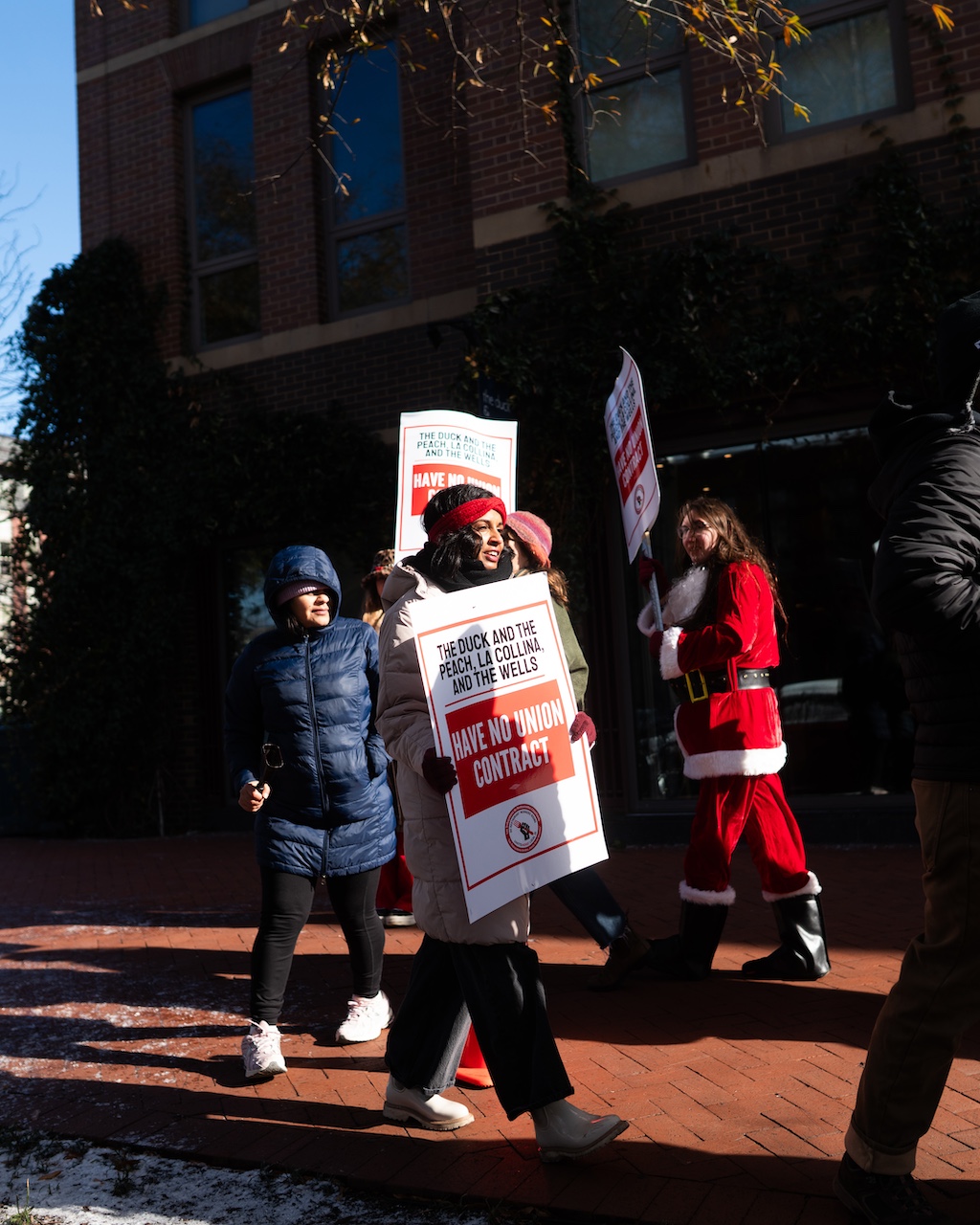
During the RENTAL Act fight, we saw narratives about tenants not wanting to pay rent. But as a tenant organizer, I’ve seen the reality tenants face. I’m going to hold on to that and organize the rest of the council against a lot of the anti-tenant and anti-renter talking points they see. I’ll make the case that we have to expand rent stabilization, because otherwise people are going to get priced out.
We have to restore DC’s TOPA (Tenant Opportunity to Purchase Act) to be a universal right so that when a landlord sells a building, people don’t get displaced; they have the opportunity to buy the building or be able to stay there with a new landlord and negotiate certain prices.
Right now, our housing system prioritizes landlords making a profit over actually providing people with a dignified place to live. The majority of the councilmembers aren’t renters, and I think they often forget that people are just trying to get by. People just want to be able to live and build a home in DC. So we have to govern from that perspective, not the perspective of, “How can a landlord or a developer make a ton of profit?”
How has your experience as an organizer impacted your campaign? How do you see that role changing if and when you’re elected?
As an organizer running for office, I have a lot of relationships with different tenant unions, with different organizers in different communities in Ward 1 and throughout DC. There’s been a really incredible response to the campaign. People have felt excited by politics, both with the Ward 1 race and the mayor’s race.
If I get elected, I’m going to fight for the things I say I’m going to fight for, because I’ve been doing it for years. I keep saying I want to be an organizer in office and I really mean that, because we have turned out this incredible base of people.
I keep saying this energy and this momentum doesn’t end on June 16 or November 3. I want to bring that base to the Wilson Building and be able to organize the other councilmembers and the mayor. Because right now, it is big-money developers, corporations, and billionaires against the people who live and work here and make DC what it is.
We have to put more of those people in front of councilmembers and make the case for funding things like health care, housing, and food assistance, rather than giving billions to a sports stadium. My role is to facilitate that for our tenants, our workers, and our immigrants, and make sure that I’m able to move my colleagues and councilmembers on the inside as well.
This will be the first election where DC residents will use ranked-choice voting. Can you speak to how that’s changed your campaign strategy?
Because it’s the first election with ranked choice, we’re doing a lot of public education around it. So we’re trying to put out videos and talk to people to make sure they know how to vote.
It’s also led to a friendlier election environment, at least in the Ward 1 race. It’s been interesting going door to door. Normally, if voters are super set on another candidate, then you would just say thank you and leave. Now you have the opportunity to ask for their second ranking or to be ranked in general. Voters are looking at candidates’ politics and looking at the campaign and now have that freedom to pick all of the candidates that they like. I think it’s also helped people who may not have considered us before, or may have been nervous about the term democratic socialist, to look at our campaign more seriously.
Before you ran for office, I first followed you through the District Delicious page. How has social media informed the way you navigate your campaign?
I think councilmembers could use the platform of their office more effectively than they do and really make it the bully pulpit for a lot of their issues. Most people are getting their news from social media rather than traditional media. Local government is really opaque to a lot of people, for a lot of reasons — a lot of them intentional. Social media and my experience with it has given me the opportunity to try to open up what the campaign looks like, and if I get elected, open up local government processes.
We’ve been trying to do some general public education videos around TOPA, around energy bill costs, around the [comprehensive] plan that’s happening right now. And I think blending my policy and organizing experience with the social media comms experience has been able to distill really wonky topics into a way that’s digestible for a lot of people.
Any final thoughts?
This election in DC really is the most important election of my time in DC. We have an incredible number of seats opening up, and this is a huge opportunity for us to be able to remake the government from one that has been siding with billionaires and corporations to one that will really fight for renters, workers, and immigrants. Ward 1 is the site of a lot of that potential.